
New Galaxy Map Unlocks Dark Matter Secrets: James Webb Telescope Reveals Universe's Skeleton
Science
C
CNBC TV18•26-01-2026, 21:59
New Galaxy Map Unlocks Dark Matter Secrets: James Webb Telescope Reveals Universe's Skeleton
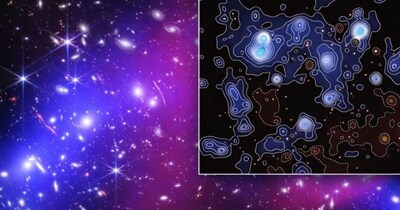
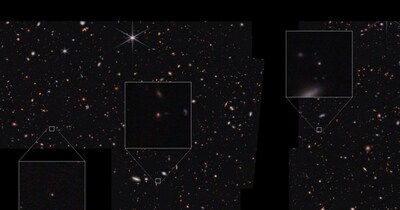
- •A new high-resolution map of distant galaxies, created using NASA's James Webb Space Telescope, aims to demystify dark matter.
- •Dark matter, an invisible substance, constitutes over a quarter of our universe and helps hold it together, but doesn't absorb or emit light.
- •Scientists study dark matter indirectly by observing how its gravity warps light from distant galaxies, revealing its distribution.
- •The latest map offers unprecedented detail over a large sky patch, with twice the resolution of previous Hubble Space Telescope attempts.
- •Published in Nature Astronomy, the map shows new galaxy clusters and dark matter strands, forming the universe's structural 'skeleton'.
Why It Matters: A new James Webb Space Telescope map provides the most detailed view yet of dark matter's role in shaping the universe.
✦
More like this
Loading more articles...